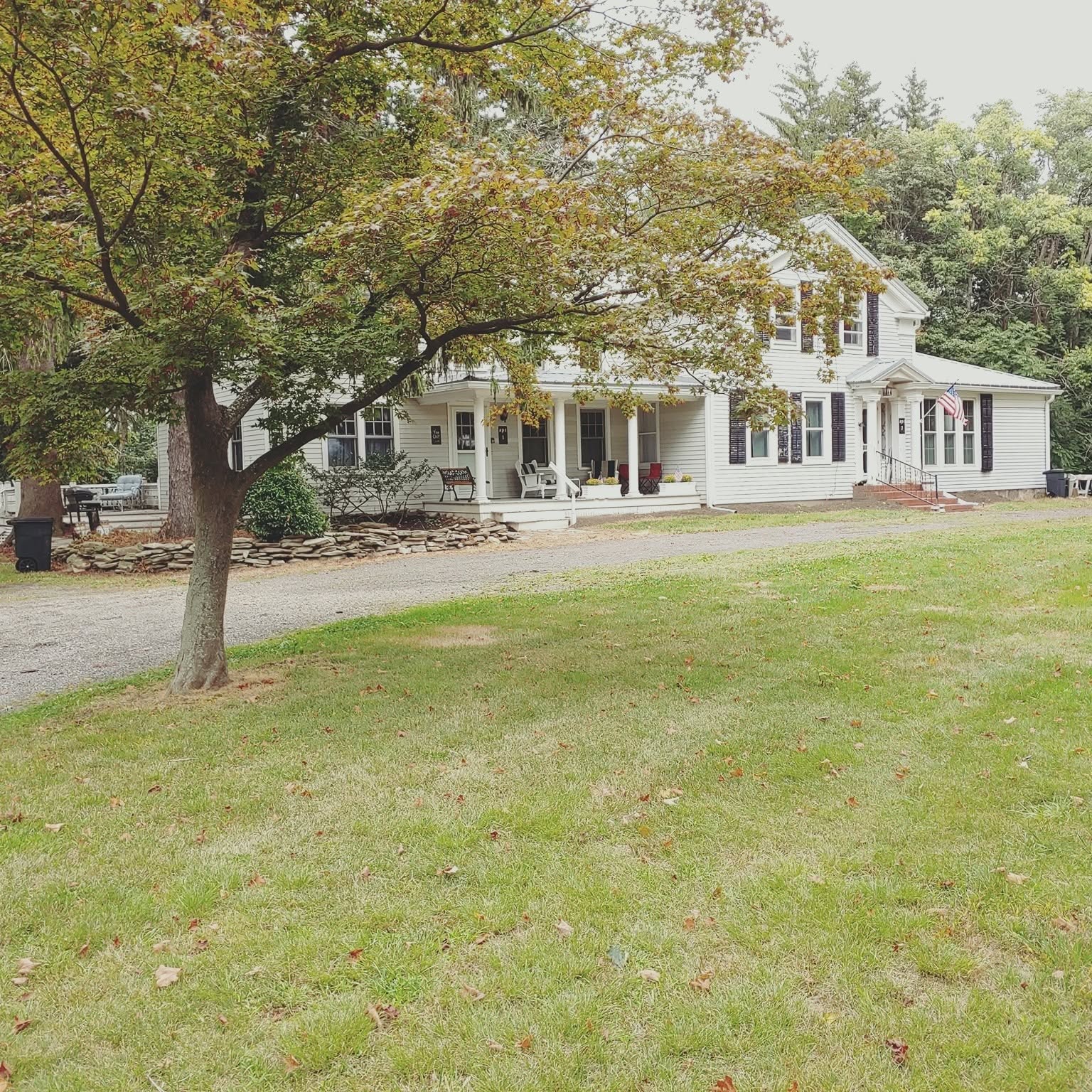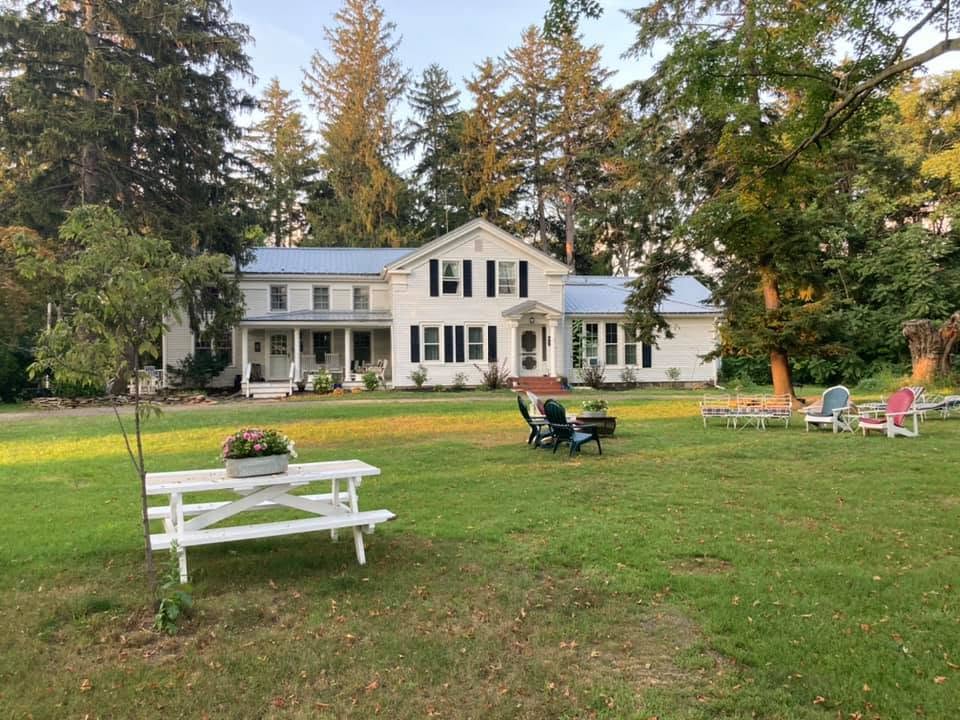
The Vine Cliff estate at dusk, on the site of the 19th-century Salem-on-Erie colony

The History · Salem-on-Erie, est. 1867

The mystics who planted these vines

Long before it was a country retreat, this land above Lake Erie was the heart of a utopian colony — its farms devoted to vineyards, its story entwining an English prophet, a British aristocrat, and a samurai from Satsuma.

A brief history

From “Salem-on-Erie” to Vine Cliff

In October 1867 the visionary preacher Thomas Lake Harris moved his Brotherhood of the New Life to Brocton, on the cliffs above Lake Erie, and named the settlement Salem-on-Erie.1,8 The colony’s farms — which at their height spanned more than 2,000 acres — were given over to grape-growing and wine-making, and the Brocton property is the land now known as Vine Cliff.9

What followed reads like a novel: a British Member of Parliament who gave up his seat to labour in these fields; young men smuggled out of feudal Japan to learn the vine here; and a wine-making enterprise that carried the estate’s disciples all the way to the hills of Sonoma County, California.3,6

“Various farms here … were devoted to vine-growing and wine-making.”
— Dictionary of National Biography, on the Brocton colony1

The story, year by year

A timeline of the estate

1823

A prophet is born

Thomas Lake Harris is born at Fenny Stratford, Buckinghamshire, England. His family emigrates to Utica, New York when he is about five.1,8

1861

The Brotherhood begins

After years as a Universalist preacher, spiritualist and mystic, Harris founds the Brotherhood of the New Life — a utopian religious community — at Wassaic, New York, drawing about sixty converts.2,7

1867

Salem-on-Erie

In October the Brotherhood migrates to Brocton, on the shore of Lake Erie in Chautauqua County. The colony becomes known as “Salem-on-Erie,” and its farms are given over to vine-growing and wine-making.1,4,8

1868

An aristocrat gives it all up

Laurence Oliphant — celebrated travel writer, diplomat and Member of Parliament — leaves the British House of Commons to follow Harris to Brocton, causing a public scandal, and labours on the estate as a common farm-hand.3,5

c. 1869

The Satsuma students

Young men from Japan’s Satsuma domain join the colony — among them Kanaye Nagasawa, smuggled out of Japan for a Western education and recruited into the Brotherhood by Oliphant. They learn viticulture in the Brocton vineyards.6,10

1875

West to California

Harris establishes a second colony at Fountaingrove, near Santa Rosa, California. Nagasawa follows and takes charge of the vineyards, building one of the great wineries of Sonoma County.4,6

c. 1881

The break with Oliphant

The Oliphants break with Harris, charging him with robbery and recovering many thousands of pounds through the courts. Legal action compels the return of Oliphant’s Brocton property, and Harris sells the colony.3,1

1906 – 1934

The Japanese “Wine King”

Harris dies in 1906. Kanaye Nagasawa succeeds him as leader of the Brotherhood and runs Fountaingrove until his own death in 1934, becoming one of California’s most celebrated winemakers.4,6,11

The people

Three lives bound to this land

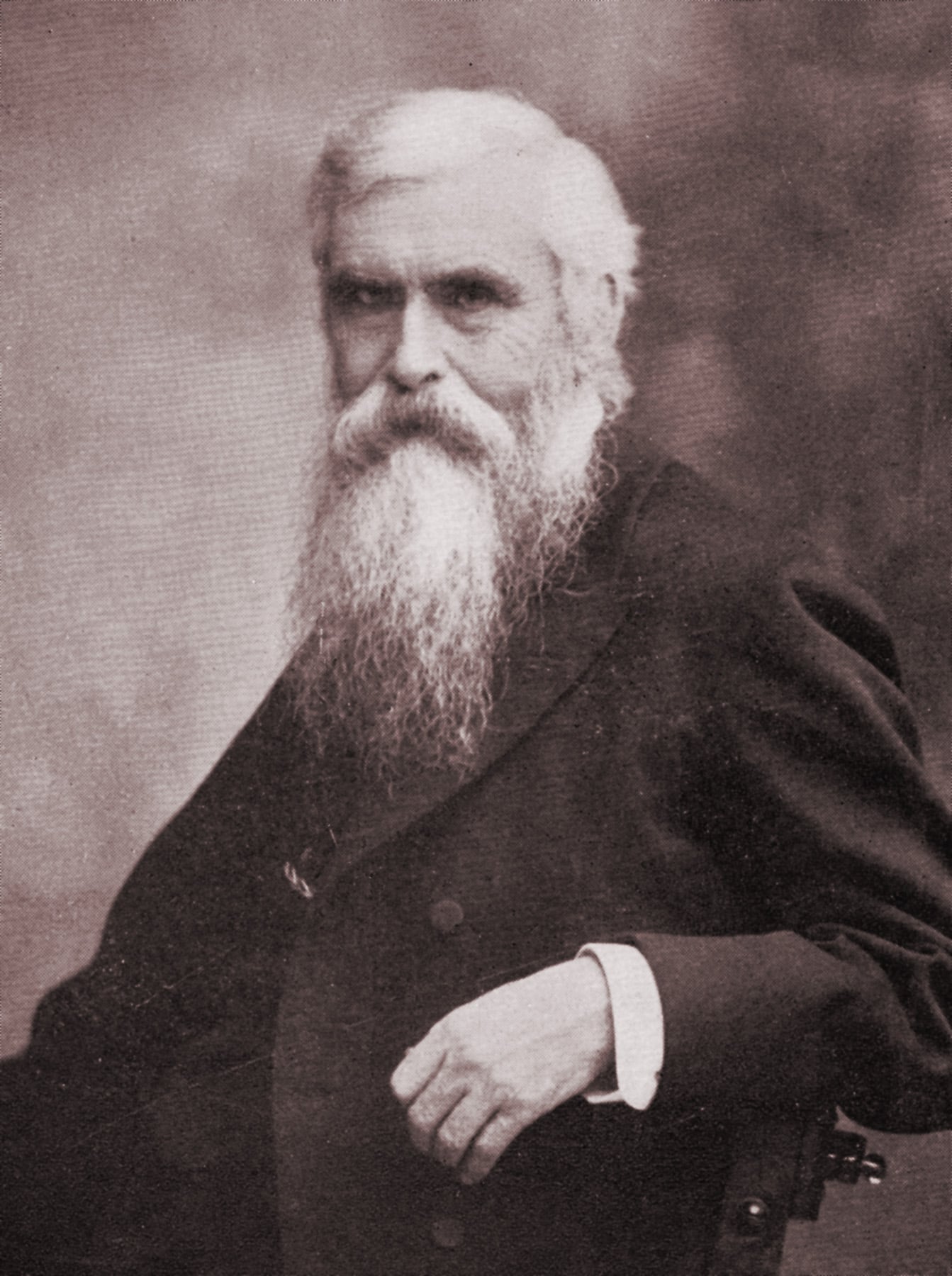
Portrait photograph of Thomas Lake Harris, founder of the Brotherhood of the New Life

Thomas Lake Harris

1823 – 1906 · Founder & prophet

Founder & prophet

Thomas Lake Harris

English-born and Utica-raised, Harris was a poet, Universalist preacher and spiritualist who came to see himself as a divine instrument. He taught a mystical doctrine of “divine respiration” — a special mode of breathing said to be the sign of possession by Christ — and of celestial “counterparts,” or heavenly partners.2,4

In 1867 he brought his Brotherhood of the New Life to Brocton and founded Salem-on-Erie. He established a wine-making industry on the estate and, answering the temperance movement, insisted his wine was “filled with the divine breath so that all noxious influences were neutralized.”2,1
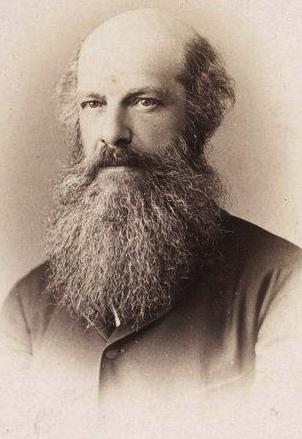
Portrait photograph of Laurence Oliphant, writer, diplomat and Member of Parliament

Laurence Oliphant

1829 – 1888 · Patron & disciple

Patron & disciple

Laurence Oliphant

Born at Cape Town, Oliphant was a famous travel writer, war correspondent, diplomat and, from 1865, Member of Parliament for Stirling Burghs. He met Harris on the mystic’s 1860 tour of England and fell entirely under his spell.3,5

In 1868 he abandoned his seat in Parliament to live as a labourer at Brocton. He and his mother, Lady Maria Oliphant — with money said to have come largely from the sale of her jewels — financed the purchase of the colony’s farms. He broke with Harris around 1881 and won much of his fortune back through the courts.5,3

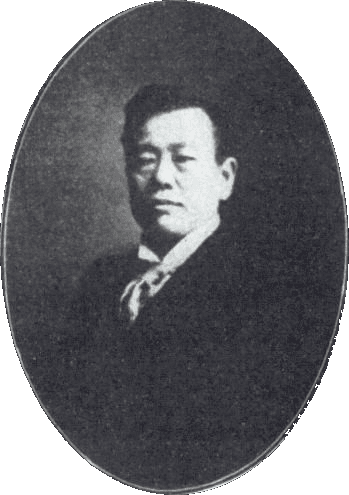
Portrait photograph of Kanaye Nagasawa, the Satsuma-born winemaker of Fountaingrove

Kanaye Nagasawa

1852 – 1934 · Vintner from Satsuma

Vintner from Satsuma

Kanaye Nagasawa

Born Isonaga Hikosuke to a Satsuma samurai family, Nagasawa was one of fifteen students smuggled out of Japan in the 1860s to study in the West. Oliphant met him in Scotland and brought him, with fellow Satsuma students, into Harris’s community at Brocton, where he learned to tend the vines.6,10

Following Harris to California in 1875, Nagasawa took charge of the vineyards at Fountaingrove and, after Harris’s death, led the Brotherhood until 1934. Celebrated as California’s “Grape King,” his winemaking career began in the vineyards above Lake Erie.6,11

A wine estate of the first rank

One of the great vineyards of Lake Erie

The Brotherhood built a stone winery and turned the slopes above the lake into a working vineyard. Period accounts record the colony holding more than 2,000 acres at Brocton — an agricultural enterprise of remarkable scale for its day — with its farms “devoted to vine-growing and wine-making.”1,9 The estate sits within what remains the largest grape-growing region east of the Rocky Mountains.

2,000+

Acres at Salem-on-Erie9

1867

Vineyards first planted8

15

Satsuma students to the West6

The historic white farmhouse at Vine Cliff today

The estate today

History you can stay in

The colony was sold after the Oliphants’ suit against Harris around 1881, and Salem-on-Erie passed into private hands.3 The farmhouse, carriage house and barn — each more than 170 years old — still stand on the cliffs where the Brotherhood once tended its vines.

Today Vine Cliff welcomes guests for weekly stays, weekend escapes and celebrations — a chance to walk the same grounds that drew dreamers, aristocrats and wanderers from across the world.

Sources & further reading

Where this history comes from

The account above is drawn from period reference works, modern encyclopaedias and local Chautauqua County and Sonoma County history. Each footnote in the text links to its source below.

  1. 1.
    “Harris, Thomas Lake.” Dictionary of National Biography, 1912 supplement (London: Smith, Elder & Co., 1912).https://en.wikisource.org/wiki/Harris,_Thomas_Lake_(DNB12)
  2. 2.
    “Harris, Thomas Lake.” Encyclopædia Britannica, 11th ed. (Cambridge University Press, 1911).https://en.wikisource.org/wiki/1911_Encyclop%C3%A6dia_Britannica/Harris,_Thomas_Lake
  3. 3.
    “Oliphant, Laurence.” Encyclopædia Britannica, 11th ed. (Cambridge University Press, 1911).https://en.wikisource.org/wiki/1911_Encyclop%C3%A6dia_Britannica/Oliphant,_Laurence
  4. 4.
    “Thomas Lake Harris.” Wikipedia, The Free Encyclopedia.https://en.wikipedia.org/wiki/Thomas_Lake_Harris
  5. 5.
    “Laurence Oliphant (author).” Wikipedia, The Free Encyclopedia.https://en.wikipedia.org/wiki/Laurence_Oliphant_(author)
  6. 6.
    “Nagasawa Kanaye.” Wikipedia, The Free Encyclopedia.https://en.wikipedia.org/wiki/Nagasawa_Kanaye
  7. 7.
    “Thomas Lake Harris.” EBSCO Research Starters — Biography.https://www.ebsco.com/research-starters/biography/thomas-lake-harris
  8. 8.
    “Thomas Lake Harris and the Brotherhood of the New Life.” Chautauqua County NYGenWeb (Portland township history).https://chautauqua.nygenweb.net/CHURCH/Portland-Harris.htm
  9. 9.
    “Lecture series explores Brocton’s 19th-century ‘cult’.” Observer Today (Dunkirk, NY), May 2023.https://www.observertoday.com/life/local-entertainment-news/2023/05/lecture-series-explores-broctons-19th-century-cult/
  10. 10.
    “History — Kanaye Nagasawa & Fountaingrove.” Paradise Ridge Winery, Santa Rosa, CA.https://www.prwinery.com/history/
  11. 11.
    Kaufman, Rebecca. “Sonoma County’s Utopian Vineyards.” The Wine History Project.https://winehistoryproject.org/sonoma-countys-utopian-vineyards/

A note on accuracy: nineteenth-century figures for acreage and membership vary between sources, and some colourful colony legends are hard to verify. Where accounts differ we have followed the most authoritative period and reference sources and noted them here so readers can judge for themselves.

Back to Vine Cliff